Aluminum Fence Installation in San Diego
Coastal-friendly, lower-maintenance, see-through perimeters and pool fencing.
Modern Fence & Deck designs hardwood fence and screen options for San Diego properties where natural material, privacy, and architectural warmth are priorities. Hardwood is a combustible material. For fire-conscious areas, near-structure transitions, or Zone 0-sensitive planning, we help compare wood against aluminum, steel, block, gabion, and other noncombustible options.
How a hardwood fence performs over time has a lot to do with what sits behind the wood. Move your cursor to reveal the concealed galvanized steel post-and-rail structure that supports the fence behind the visible boards.
Three common board layouts for hardwood fence runs. Each offers a different visual rhythm and level of through-the-fence sightline.
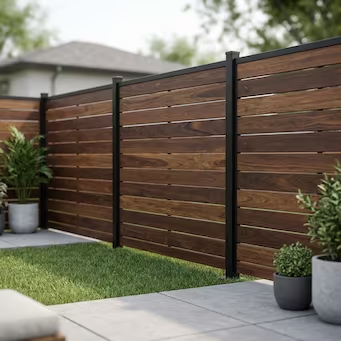
Clean, contemporary lines. Boards run horizontally for a sleek, architectural aesthetic that pairs well with modern San Diego frontages.
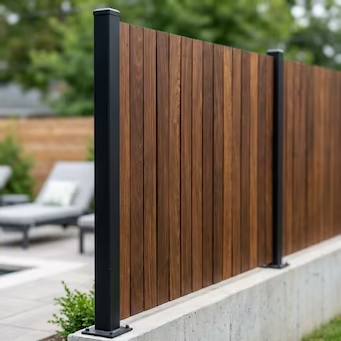
A more traditional fence read. Vertical boards create classic fence lines; species and finish selection drive long-term stability.
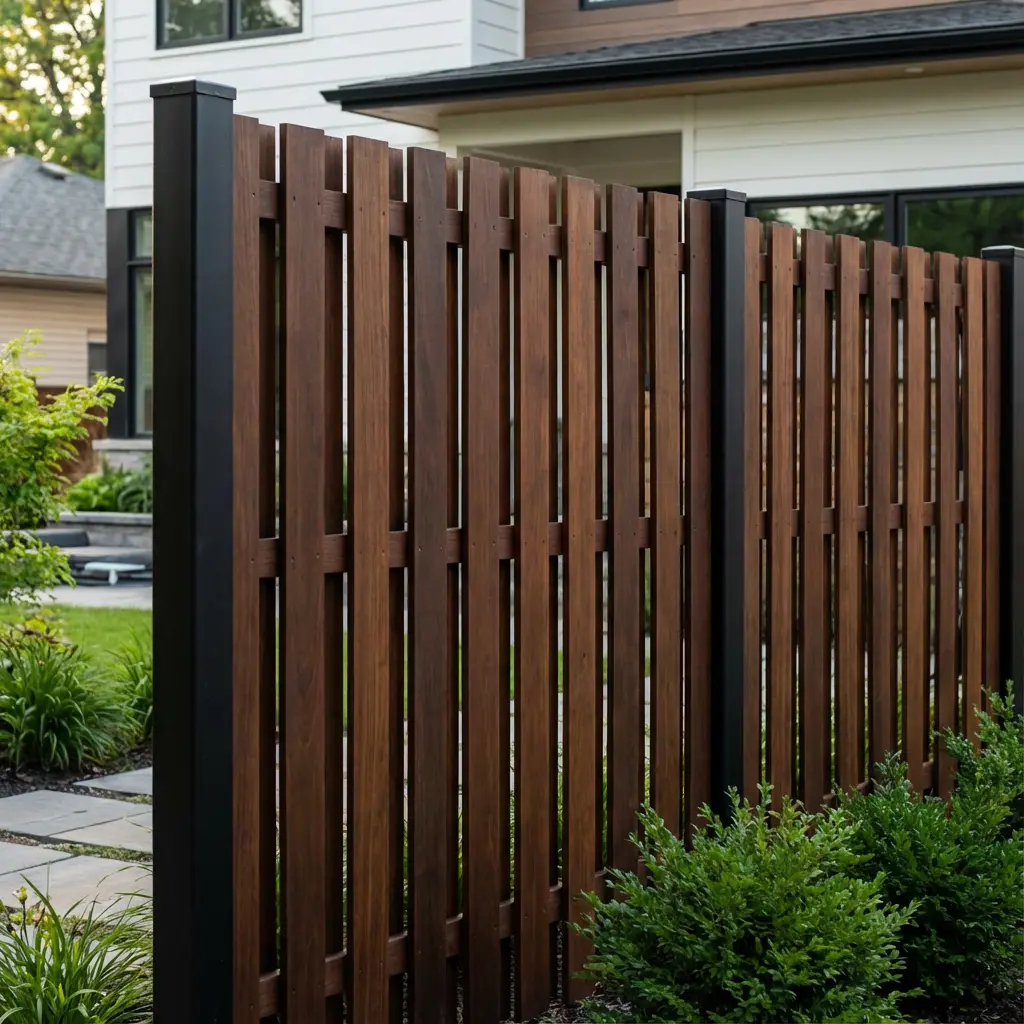
Both sides finished. Overlapping boards create depth and shadow lines, with no see-through gaps between boards.
Three dense tropical hardwoods commonly considered for fence and screen work in San Diego. Density and natural oil content vary by species, and so does behavior over time. All hardwood remains a combustible material.
Wood colors shown are representative only and may vary in person due to natural grain variations and lighting conditions.
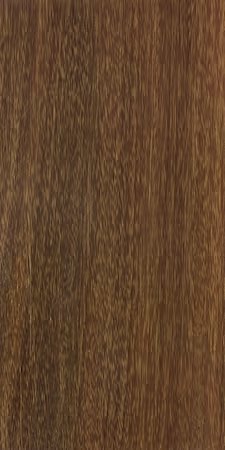
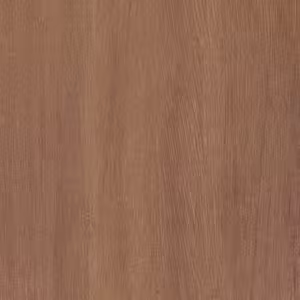
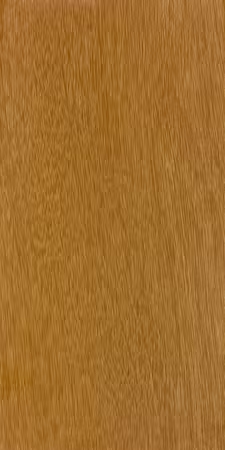
A dense architectural hardwood often selected for architectural privacy screens, gates, and warm modern fence designs. Certain Ipe products may have ASTM E84 Class A flame-spread documentation, depending on supplier and test report.
Because Ipe is still a combustible wood material, near-structure and Zone 0-sensitive applications should be reviewed carefully against site conditions, AHJ expectations, and written scope. It should not be treated as a noncombustible material or automatically appropriate for Zone 0-sensitive applications.
Where hardwood is a strong fit — and where a noncombustible material is usually the better call.
See the full Fire-Conscious Fence Material Comparison for a deeper material-by-material breakdown, or the full technical data for test standards.
Hardwood is at its best where natural material, warmth, and architectural texture are the design priority — and the fire-exposure profile is low.
Hardwood is still a combustible wood material, even when product-specific surface-burning documentation exists. For near-structure fencing, attached fence sections, and Zone 0-sensitive areas, the design should be reviewed carefully against site conditions, product documentation, AHJ expectations, and written scope. Aluminum, steel, block, gabion, or other material strategies may also be part of the conversation.
If the site favors a noncombustible material, here are common noncombustible material strategies in San Diego.
Coastal-friendly, lower-maintenance, see-through perimeters and pool fencing.
Security-conscious perimeters, estate frontage, and stronger architectural presence.
Solid masonry separation, privacy, grade transitions, and gate columns near the home.
Stone-and-basket walls for hillside transitions, drainage-conscious landscape walls, and architectural texture.
Near-structure fence, gate, and vegetation planning for fire-conscious San Diego properties.
Side-by-side material comparison so the right choice fits the site and design.
Honest answers about fire-conscious use, where hardwood fits, and where it doesn't.
Hardwood is combustible. It may be appropriate for certain design applications, but fire-conscious or Zone 0-sensitive areas often require evaluating noncombustible or lower-fuel material options. Final material recommendations depend on site conditions, jurisdiction, AHJ review, carrier expectations, and written project scope.
Some Ipe products have achieved ASTM E84 Class A flame-spread results in product-specific testing. That does not make Ipe noncombustible, and it does not automatically make it appropriate for every Zone 0, attached-fence, or near-structure application. Product documentation, installation details, local requirements, AHJ review, and written scope all matter.
Ipe can be one of the stronger wood options from a surface-burning standpoint when product-specific Class A documentation exists. But Ipe is still wood, so for fire-conscious near-structure planning, combustible fence replacement, and Zone 0-sensitive areas, aluminum, steel, block, gabion, or other noncombustible material options should usually be evaluated. See Zone 0 Fence and Gate Planning and the Fire-Conscious Fence Material Comparison.
Hardwood is a combustible material and is generally less suited for Zone 0-sensitive areas near a structure. Aluminum, steel, block, gabion, or other noncombustible material strategies are typically evaluated first for near-structure conditions. Always confirm requirements with the local AHJ and applicable insurance carrier. See Zone 0 Fence and Gate Planning.
Aluminum Fence Installation in San Diego, Steel Fence Installation in San Diego, Block Walls in San Diego, and Gabion Walls in San Diego are common noncombustible material strategies in San Diego. The right choice depends on the site, the use case, and whether the run is near a structure, alongside a hillside, or part of a defensible-space-sensitive area.
Hardwood requires ongoing care. Depending on the species and finish, that can include periodic oiling or sealing, cleaning, and managing the natural color change as the wood weathers. Service life is influenced by exposure, finish choice, installation quality, and maintenance.
Pricing varies by species, fence height, length, post system, finish, demolition, gate count, and site access. We provide a site-specific written estimate after an on-site review. Book a Site Review.
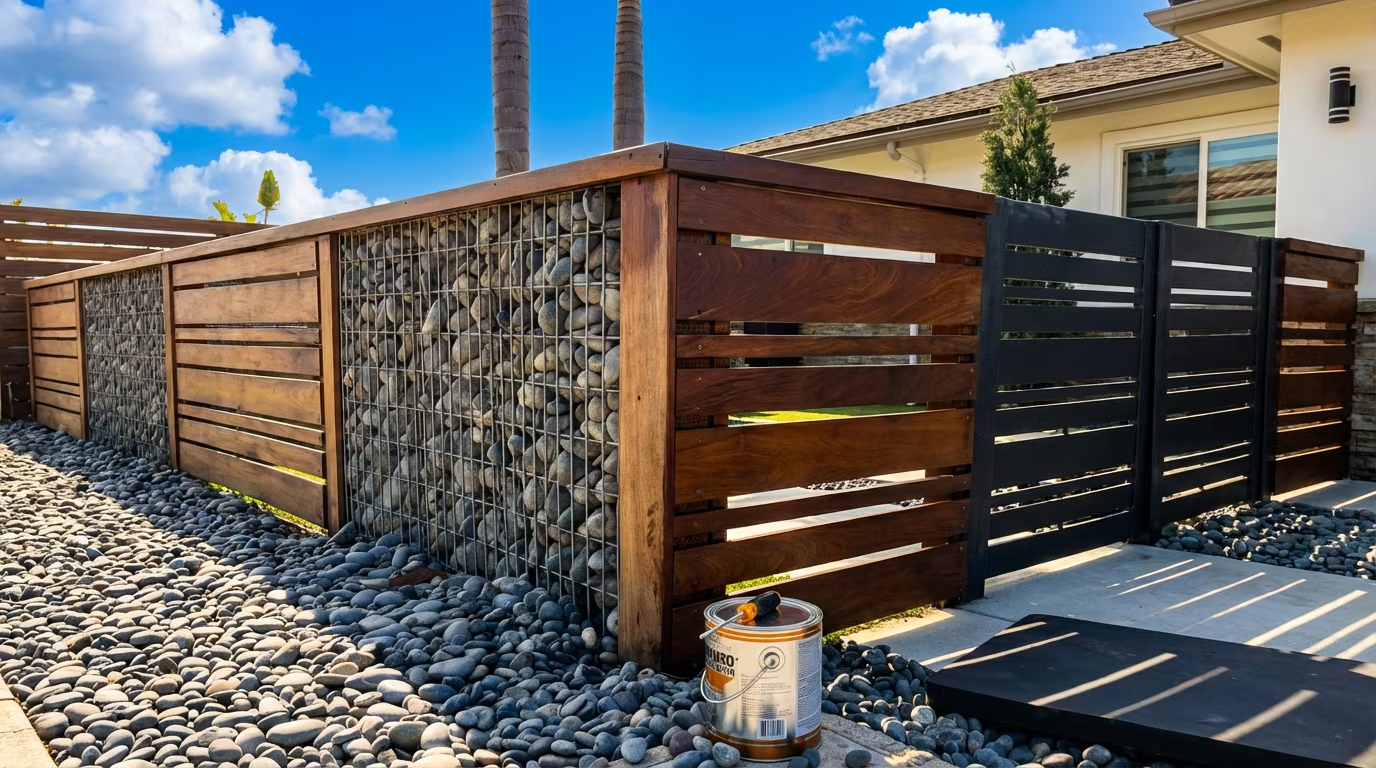
Real project
Horizontal ipe slats over a gabion base on a front-yard perimeter we built in Pacific Beach — the dense hardwood grain and cap detail shown here are the same species covered above.
See more completed work →On-site estimates by appointment for hardwood fencing and architectural wood screens across San Diego County. Timing depends on project scope, location, and site conditions.
Coastal-friendly aluminum runs that pair well alongside hardwood feature panels, especially near pools and side yards.
Manual pedestrian, courtyard, pool, and side-yard gates designed alongside the fence rather than added later.
How material choice changes in the near-structure zone where hardwood is less commonly the recommended option.
Also relevant: steel fence installation in San Diego, block walls in San Diego, gabion walls in San Diego, composite fencing, fire-conscious fence material comparison, and Book a Site Review.
Architectural wood screens, courtyard runs, and garden frontages on properties where natural material is the design goal.
Architectural wood panels and modern board-on-board designs detailed for coastal exposure and finish planning.
Backyard privacy and garden walls where the design intent is wood-forward and the fire profile is moderate.
We also work in Del Mar, Coronado, Poway, Encinitas, Carlsbad, and across San Diego County.