Aluminum Fence Installation in San Diego
Coastal-friendly aluminum runs for pool fencing, side yards, and fire-conscious property areas.
Modern Fence & Deck designs composite fence and screen options for San Diego homes where privacy, modern design, and lower maintenance compared with many wood systems are priorities. For fire-conscious or Zone 0-sensitive areas, material recommendations should be reviewed against product documentation, site conditions, AHJ expectations, and written project scope.
How composite typically compares against two other common privacy-fence materials. Behavior is product-specific; final selection is reviewed against manufacturer documentation and the project scope.
Composite is at its best where the project needs a wood-look fence with lower maintenance than traditional wood — in areas where fire exposure is not the primary concern.
Composite products vary widely. Fire performance depends on the exact product, formulation, test report, installation, adjacent materials, and local review. Composite should not be treated as a universal fire-conscious or Zone 0 solution.
Finish performance, fade coverage, and warranty terms vary by product line and contract.
Colors shown are representative only and may vary in person due to screen differences and lighting conditions.
Outer capstock may help with moisture, staining, and UV exposure under normal use when installed and maintained per the manufacturer's product documentation.
High-density polyethylene combined with reclaimed wood fiber, wrapped in a synthetic capstock. Exact material composition, cap-layer formulation, density, and tensile characteristics vary by product line and are documented in the manufacturer's specifications.
Product-specific formulations may help reduce rot, warping, and routine staining under normal use when installed and maintained per the manufacturer's product documentation.
Fire performance is product-specific and confirmed against the manufacturer's test report for the exact product, installation, and adjacent materials.
Dimensional performance varies by board profile and installation conditions. Manufacturer spacing, fastening, and support guidance drive long-term performance.
Boundary verification, utility marking, grade and access assessment, and post-location planning.
Post holes augured to depth, concrete footings poured, posts set and aligned for the run.
Horizontal rails mounted and composite boards installed per the manufacturer's spacing and fastener guidance.
Plumb check, gate operation, hardware verification, client walkthrough, and project documentation.
In one 6 ft x 6 ft configuration, 4x4 posts carry metal channels on their inside faces and composite boards slide into the channels to create the privacy panel. Actual post, channel, board, span, and footing specifications must follow the selected manufacturer's documentation and the site-specific project scope.
Composite is a category, not a single material. Two product lines that look similar on a website can behave very differently in the real world. Test standards and documented material data are collected in our technical data. Before final material selection, here is what we look at — and what we expect from the manufacturer.
Honest answers about fire-conscious use, maintenance, and where composite fits.
Composite products vary widely. Fire performance depends on the exact product, formulation, test report, installation, adjacent materials, and local review. Composite should not be treated as a universal fire-conscious or Zone 0 solution. Final material recommendations are reviewed against product documentation, site conditions, AHJ expectations, and written project scope.
Zone 0 use depends on the specific composite product, its test documentation, installation details, adjacent materials, jurisdiction, and AHJ review. Aluminum Fence Installation in San Diego, Steel Fence Installation in San Diego, Block Walls in San Diego, and Gabion Walls in San Diego are more commonly evaluated as the first noncombustible options for near-structure conditions. See Zone 0 Fence and Gate Planning.
Composite is generally lower maintenance than many wood systems. It still requires periodic cleaning, can fade or stain depending on exposure, and behaves differently across product lines. Maintenance, warranty terms, and expected appearance over time are product-specific.
It depends on the goal. Composite offers a wood-look aesthetic with lower maintenance than wood. Aluminum is noncombustible, lighter, and often well-suited for coastal exposure, pool fencing, and fire-conscious areas. The right material is driven by site, design intent, and exposure.
Pricing varies by product line, fence height, length, post system, demolition, gate count, and site access. We provide a site-specific written estimate after an on-site review. Book a Site Review.
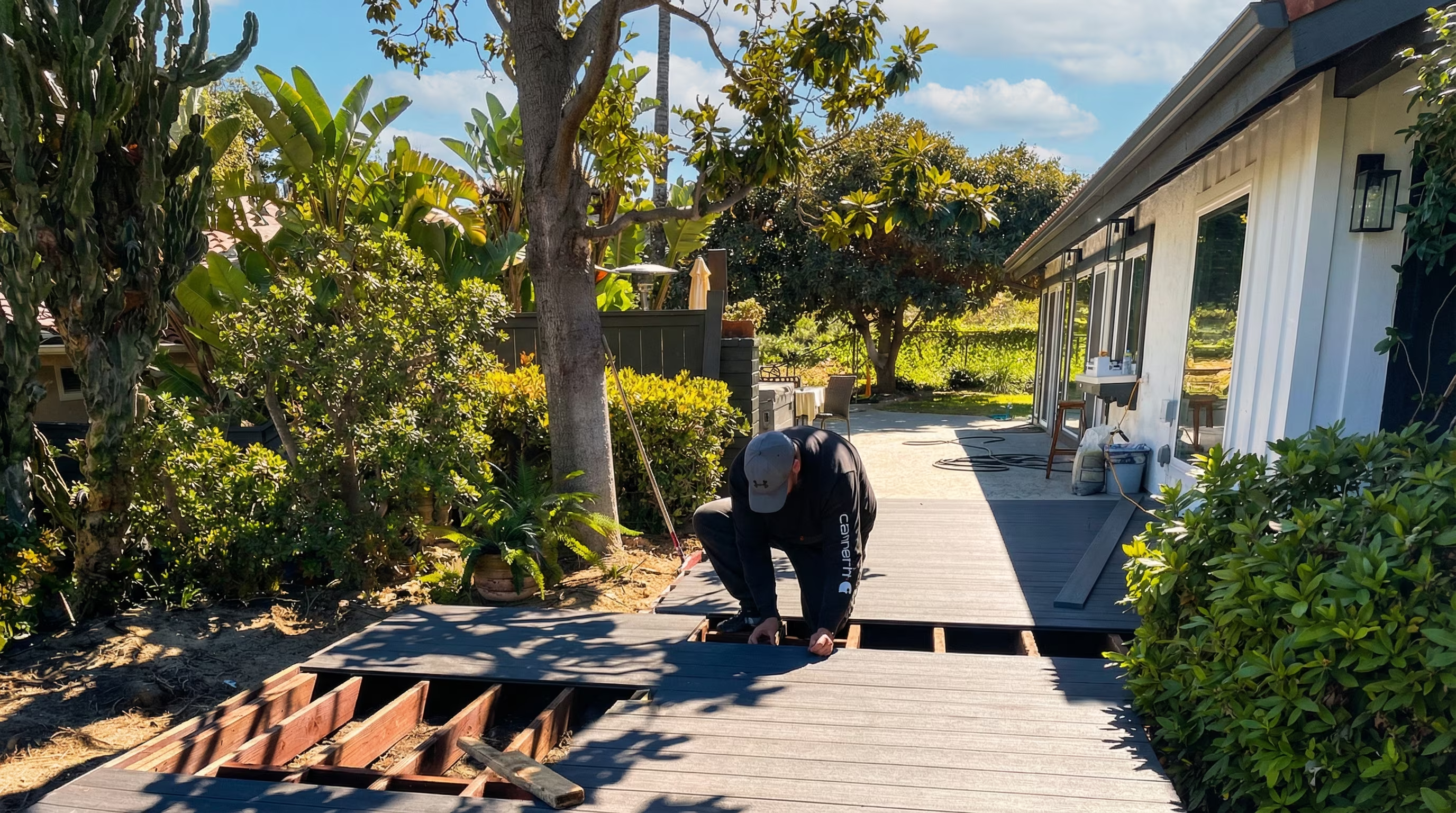
Real project
One of our crew laying composite boards on a San Diego job — the wood-look finish and hidden-fastener detail carry across our composite fence and deck work.
See more completed work →On-site estimates by appointment for composite fence and screen options across San Diego County. Timing depends on project scope, location, and site conditions.
Book a Site Review Plan Your ProjectCoastal-friendly aluminum runs for pool fencing, side yards, and fire-conscious property areas.
When the design intent is real wood rather than wood-look, with the honest tradeoffs spelled out.
How material choice changes in the near-structure zone where composite is less commonly the recommended option.
Also relevant: steel fence installation in San Diego, block walls in San Diego, gabion walls in San Diego, custom gates in San Diego, fire-conscious fence material comparison, and Book a Site Review.
Garden, pool, and back-of-property runs where the design favors a wood-look board over real wood.
Modern composite designs detailed for coastal exposure, UV planning, and finish selection.
Backyard privacy runs and modern slat layouts on properties outside the highest fire-exposure zones.
We also work in Del Mar, Coronado, Poway, Encinitas, Carlsbad, and across San Diego County.