Why Your Beverly Hills Property Might Need a New Kind of Fence
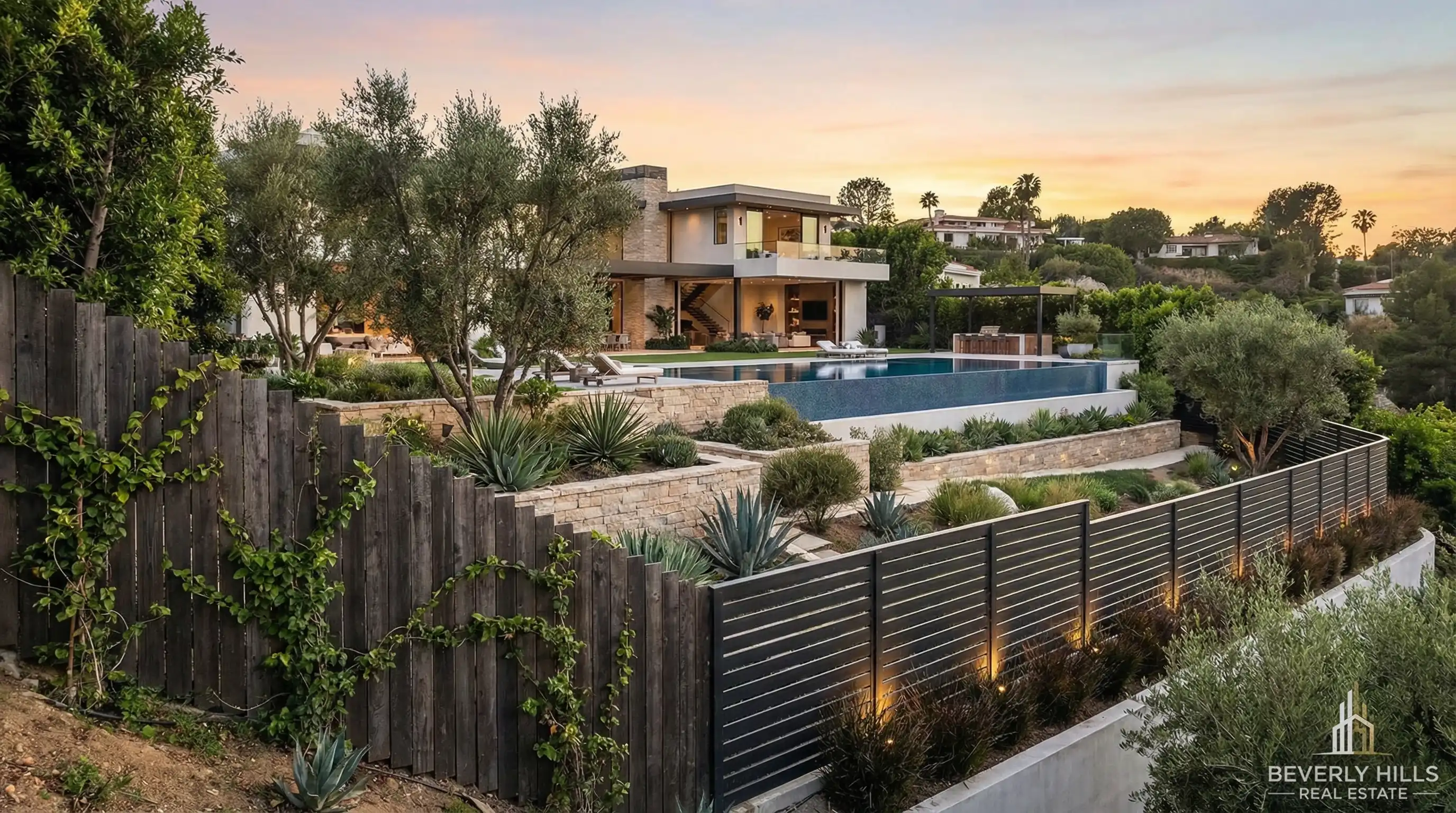
If you own a home in Beverly Hills, you have likely heard about “Zone 0” and new wildfire rules. It is a fair question to ask what they mean for your fences, walls, and gates, especially on hillside lots with lush, private gardens.
This isn’t about fear. A wood fence that runs up to the house can carry fire to the structure, and that is the concern behind the new rules. This guide covers where those rules stand, why aluminum and steel make sense near the house, where composite fits, and what to ask before you change anything.
Where the Zone 0 rules stand
California’s defensible space law is organized in zones. Zone 0 is the first five feet next to your house, the “ember-resistant” area. AB 3074 directed the State Board of Forestry and Fire Protection to write the Zone 0 rules. The Board adopted them as emergency regulations on August 19, 2026. The Board withdrew them from state review on September 8, 2026; as of October 2026 they are not in effect.
As the Board’s notice summarized the withdrawn text: had the rules taken effect, no new combustible fences or gates would be allowed in Zone 0, and no combustible fence or gate could attach to the house; a fence that attaches would need a 5-foot non-combustible section at the attachment point. “Non-combustible” is defined by the ASTM E136 test. Existing homes would get 3 years for the fence and gate rules, or up to 5 years if the local fire agency sets a longer timeline.
Local rules can differ and can come sooner. Confirm current requirements for your parcel with the Beverly Hills Fire Department and Building and Safety before you design.
Which materials fit where
Aluminum fencing won’t burn, it’s light, and it resists corrosion well. A powder-coated aluminum fence does not rust the way steel does and needs little upkeep. It is a common choice for pool areas and boundary fences, and the styles go well beyond the basic industrial look, including designs that resemble wrought iron.
Steel fencing is the heavier-duty option, stronger and well suited to substantial pedestrian entries and courtyard gates. The finish is critical. A galvanized steel frame with a proper powder-coat finish holds up; a cheap paint job will bubble and peel, leaving the steel exposed.
Composite fencing fills a specific role. Composite is combustible, even when a product carries a Class A flame spread rating under ASTM E84, so it does not meet a non-combustible (ASTM E136) standard. Keep composite out of Zone 0 and use it for privacy runs farther from the house, with a metal section where the fence meets the structure.
Questions to ask any installer
- Ask how they handle Zone 0. They should be able to explain where the rules stand and which sections of your fence are within five feet of a structure.
- Get the material specifics. Don’t settle for “aluminum fence.” Ask for the brand, the metal gauge, and the type of powder-coat finish. For any product sold as fire-rated, get the test documentation.
- Check how they do foundations and attachments. A proper install usually needs concrete footings and metal brackets that separate the fence from any combustible parts of your house.
- Ask who pulls the permit, if one is needed, and what the city will want to see.
Working on a project in Beverly Hills?
See local service options, material guidance, and nearby project coverage for Beverly Hills.
Explore Beverly HillsLocal details you shouldn’t overlook
First, property lines and surveys. On smaller, older lots, an inch counts. A new fence is the time to confirm your property lines with a survey.
Second, HOAs and historic districts. Some neighborhoods have strict design rules. A modern, simple aluminum design might not be acceptable in a Spanish Colonial Revival area. You often need HOA design approval before you apply for a city permit, so build that into your schedule.
Third, the finish. Gaps, messy welds, or visible brush strokes stand out. The installation should be clean, with straight lines and consistent alignment.
Getting a fence that works for your home
Start with someone looking at your property and pointing out what’s in Zone 0: where an existing wood fence touches the stucco, or where a trellis over the back patio could be an issue.
From there, it’s a talk about design, material, and cost. A full perimeter replacement is a bigger project; replacing only the five-foot section of fence attached to your garage is a smaller one. Either way, get a detailed quote that lists material, labor, permit fees, and concrete work.
Don’t wait for fire season. Permits, HOA approval, and installation can take weeks.
Final thoughts
Replacing the fence sections closest to your house with non-combustible material removes a weak spot whether or not a statewide Zone 0 rule takes effect, and a well-built metal fence can improve curb appeal at the same time.
FAQ
Q: Does my entire fence need to be replaced if I live in Beverly Hills? A: Not always. The Zone 0 rules focus on the area within five feet of buildings and on fences that attach to them. Fencing farther away is not the main focus of Zone 0.
Q: Is a vinyl fence fire-resistant? A: Vinyl isn’t a good pick near the house. It can melt and warp from heat, and it is not non-combustible, so it would not meet a Zone 0 non-combustible standard.
Q: How long does the permit process take in Beverly Hills? A: It varies with the project and the city’s workload. Ask Building and Safety for current timelines, and allow extra time if you also need HOA approval.
Q: Will a metal fence increase my property value? A: It can help. A well-designed metal fence is a durable, low-maintenance feature, and buyers in fire-prone areas may see fire-safety upgrades as a plus.
Q: Can I keep my existing brick or stone wall? A: Masonry is non-combustible. The trouble often comes with wooden gates set into those walls or wooden framing attached to them. Within Zone 0, those parts are the ones to swap for metal.
Verification note (updated March 26, 2026): Regulatory requirements can vary by parcel, jurisdiction, and inspection cycle. Confirm current requirements with your AHJ and official California sources before final design or contract decisions: PRC 4291, Board of Forestry Zone 0 updates, and OSFM FHSZ maps.